AI’s Coming for Your Paycheck, will You Be Broke or Ballin'?
Updated: Jul 6, 2025
Career clarity or career crisis — it’s time to face the truth about the AI-powered future.

The world is changing faster than anyone predicted — and no, it’s not because of a pandemic, or even politics. It’s because of artificial intelligence. While industry leaders and LinkedIn influencers are busy posting vague mantras like “AI is a tool, not a threat,” the reality on the ground is far grittier. People are losing jobs. Roles are disappearing. And deep down, we’re all wondering the same thing:
This isn’t just about automation. It’s about survival in an economy that’s being rewired by the minute. What’s more dangerous than the technology itself is the silence around it — the corporate gaslighting, the empty promises about “upskilling,” and the myth that only low-level jobs are at risk.
The Divide No One Wants to Talk About
There’s a new class war brewing — not between rich and poor, but between those who understand how to work with AI and those who don’t.
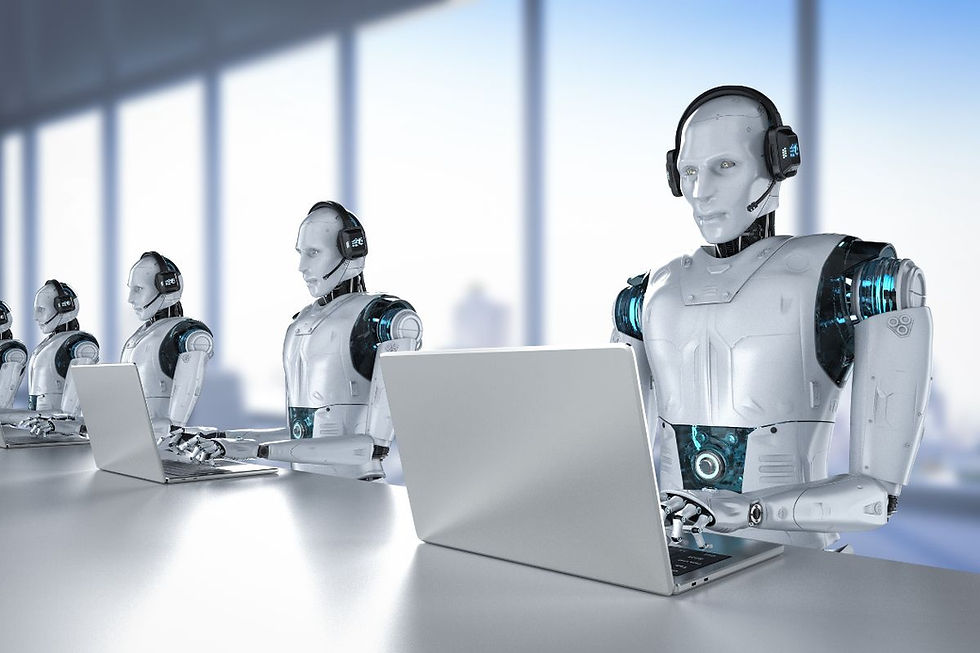
We’ve already seen it happen in quiet waves. Data entry roles have vanished overnight. Customer service centres are being replaced by chatbots that never sleep or unionize. Even writers, coders, paralegals, and junior designers are finding their tasks sliced in half — or fully replaced by — software that doesn’t ask for coffee breaks.
At the same time, another class of workers is thriving. AI prompt engineers — a job that barely existed two years ago — are now making six-figure incomes. Marketers who know how to use AI to analyze trends and write ads faster are being promoted. Designers who pair Midjourney with their creative eye are producing campaign-ready visuals in hours.
It’s not that AI is killing jobs — it’s killing some, and creating goldmines for others. The problem? No one knows which side they’ll land on.
The Hidden Risk You’re Probably Ignoring
Most people believe their job is too “human” to be replaced. That emotional intelligence, creativity, or institutional knowledge will protect them.
That’s a lie.
AI doesn’t need to replace everything you do — it only needs to replace the most expensive or repetitive 30%. And once a company realizes it can trim the fat, it will. They always do.
HR departments won’t tell you this. Neither will your boss. But if your job can be broken down into repeatable processes, even if you’re “senior,” it’s already under review. Your replacement isn’t a robot — it’s a subscription-based dashboard that costs a fraction of your salary.
Reality Check
Take a moment. Ask yourself:
Do I rely on the same workflow every day?
Have I tried the newest AI tools in my industry?
Am I creating more value, or just executing orders?
If AI could do 60% of my job, what happens to the other 40%?
The scariest part of AI isn’t that it’s replacing people. It’s making people less necessary. Once that happens, you’re no longer expensive — you’re expendable.
What People Are Thinking — But Too Scared to Say
In boardrooms and break rooms, whispers have turned to resignation. Some believe AI will empower creativity. Others quietly admit it’s a smokescreen for cost-cutting.
“They say we should use AI to be more efficient. But the last guy who did that got laid off because the company realized they didn’t need him anymore.”
“I’m learning all these tools, but what if the real goal is to make me do the work of three people?”
“Why does every ‘AI innovation’ feel like a way to fire someone?”
These aren’t just anecdotes. They’re red flags. And ignoring them won’t make them go away.
You’ve heard the advice before: upskill, pivot, adapt. But let’s get real — not everyone has the time or energy to “learn to code.” So what now?
Start with AI literacy, not mastery. You don’t need to become an engineer — you need to understand how these tools work and how to use them in your role better than your peers. Whether you’re in finance, marketing, HR, or logistics, there’s an AI tool reshaping your field. If you’re not trying them, someone else is — and they’re becoming more valuable than you.
Focus on what machines can’t do well: building trust, solving human conflicts, connecting narratives, and leading teams. These soft skills are quickly becoming hard requirements.
Most importantly, stop thinking your job is “safe.” No job is safe — only people who can adapt are.
The Bottom Line
This isn’t fearmongering. It’s a wake-up call.
Yes, AI could make you richer — if you learn to ride the wave. But it could just as easily wipe out everything you’ve built if you pretend it’s “not your problem.” The truth is, we are entering a future where the middle ground is shrinking. You’ll either be the person who uses AI or the one quietly replaced by it.
There’s no neutral anymore.
References
World Economic Forum. (2023). The Future of Jobs Report 2023. Retrieved from https://www.weforum.org/reports/the-future-of-jobs-report-2023/
McKinsey & Company. (2023). Generative AI and the future of work. Retrieved from https://www.mckinsey.com/
PwC. (2022). Will robots really steal our jobs? Retrieved from https://www.pwc.com/gx/en/issues/data-and-analytics/publications/artificial-intelligence-study.html
The Uncommon Breed


Comments